Bellevue homes in neighborhoods such as Crossroads, Somerset, and Eastgate often date from the 1960s through 1980s, with original plumbing that can complicate walk in shower installs. Wet winters bring constant moisture that demands upgraded waterproofing membranes and proper slope on the shower pan to prevent leaks into neighboring rooms or lower levels. Local soil conditions near Lake Washington can also affect foundation drainage, so we inspect for any water intrusion risks before framing begins. Materials must handle humidity without warping, which is why we select tile backer boards and sealants rated for Pacific Northwest conditions rather than standard options used in drier climates.
King County building codes require specific ventilation and moisture barriers in wet areas, especially in older stock near Bellevue Square or Meydenbauer Center where renovations frequently touch shared walls. Walk in shower remodels here routinely include curbless entries for accessibility while maintaining a strong seal against the heavy seasonal rain. Homeowners in Factoria and Downtown Bellevue sometimes overlook how proximity to Lake Washington increases ambient humidity, leading to mold risks if the vapor barrier is not installed correctly. We always check existing electrical and plumbing routes to avoid conflicts with the new drain assembly and mixing valves.
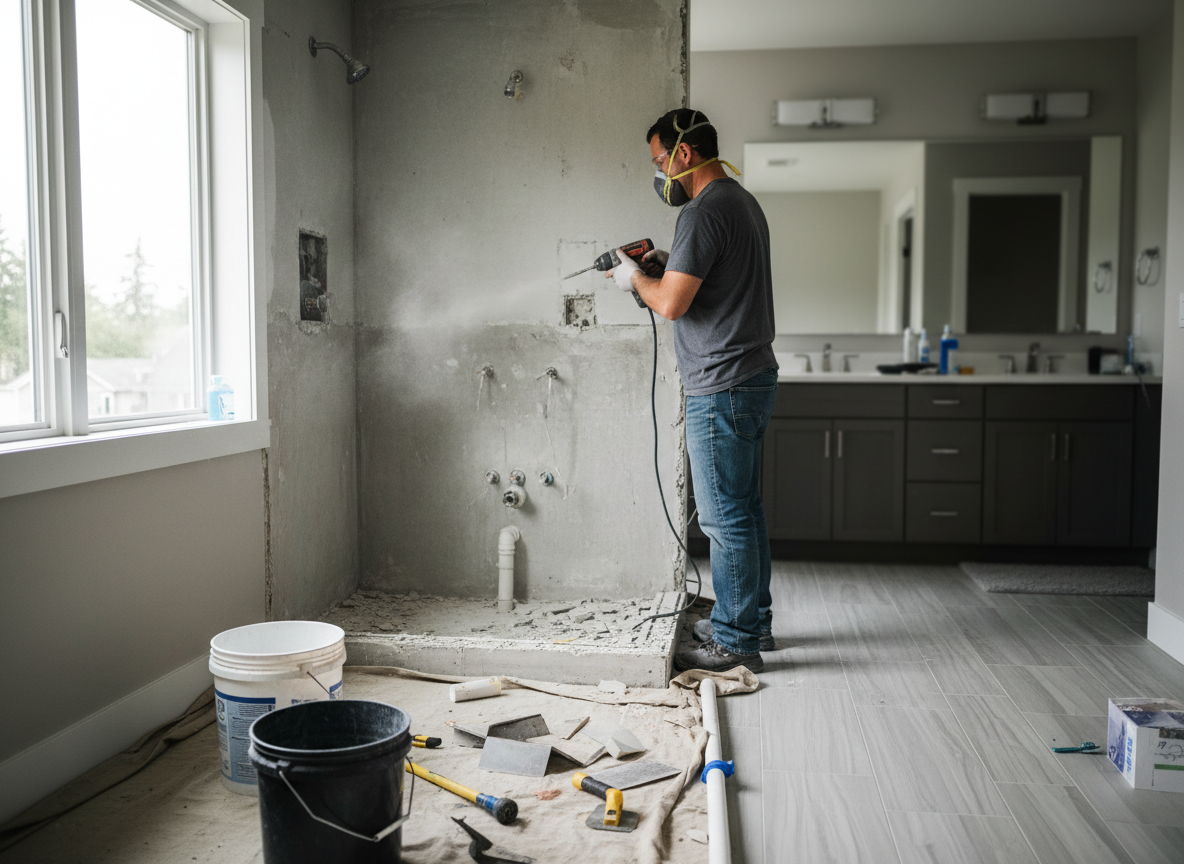
Terrain slopes in areas like Lake Hills can influence floor leveling during demolition, requiring additional shimming or self-leveling compounds to achieve the precise pitch needed for proper drainage. Remodels in these locations benefit from pre-slope testing with water before tile work starts. We coordinate with local suppliers for quick access to parts when unexpected rot appears behind old shower surrounds, a common find in Redmond-adjacent homes with similar construction eras.
Technician insight
In Bellevue, the thing that catches most people out with Walk In Shower Remodel is hidden water damage from decades of wet winters in homes around Lake Hills and Eastgate. Older plumbing runs often leak behind the walls once we open them, and the constant rain means any missed slope or seal shows up fast. We always pull the old surround early and test the subfloor before quoting final numbers.
Eastgate Shower Upgrade
A 1970s Eastgate home showed slow drain issues during heavy winter rain. We found rotted subfloor and improper original slope near the Lake Washington side of the property. After replacing the damaged joists, installing a new pre-sloped pan, and adding extra ventilation, the shower passed multiple water tests with no leaks.
How it works
- 1
Site Assessment
Measure the existing shower space, inspect for moisture damage, and review plumbing routes in the specific Bellevue neighborhood.
- 2
Design and Material Selection
Choose waterproofing systems, tile, and fixtures suited to wet winters while meeting King County code requirements.
- 3
Demolition and Prep
Remove old fixtures, repair any hidden damage, and install new slope and membrane before framing adjustments.
- 4
Installation and Finishing
Set the walk in shower base, tile walls and floor, install glass, and complete ventilation and sealing.
- 5
Final Inspection
Test drainage, check seals, and walk through maintenance steps with the homeowner.
Pricing
Costs vary by home age, material choices, and any moisture repairs found during demolition; we provide upfront quotes after assessment.