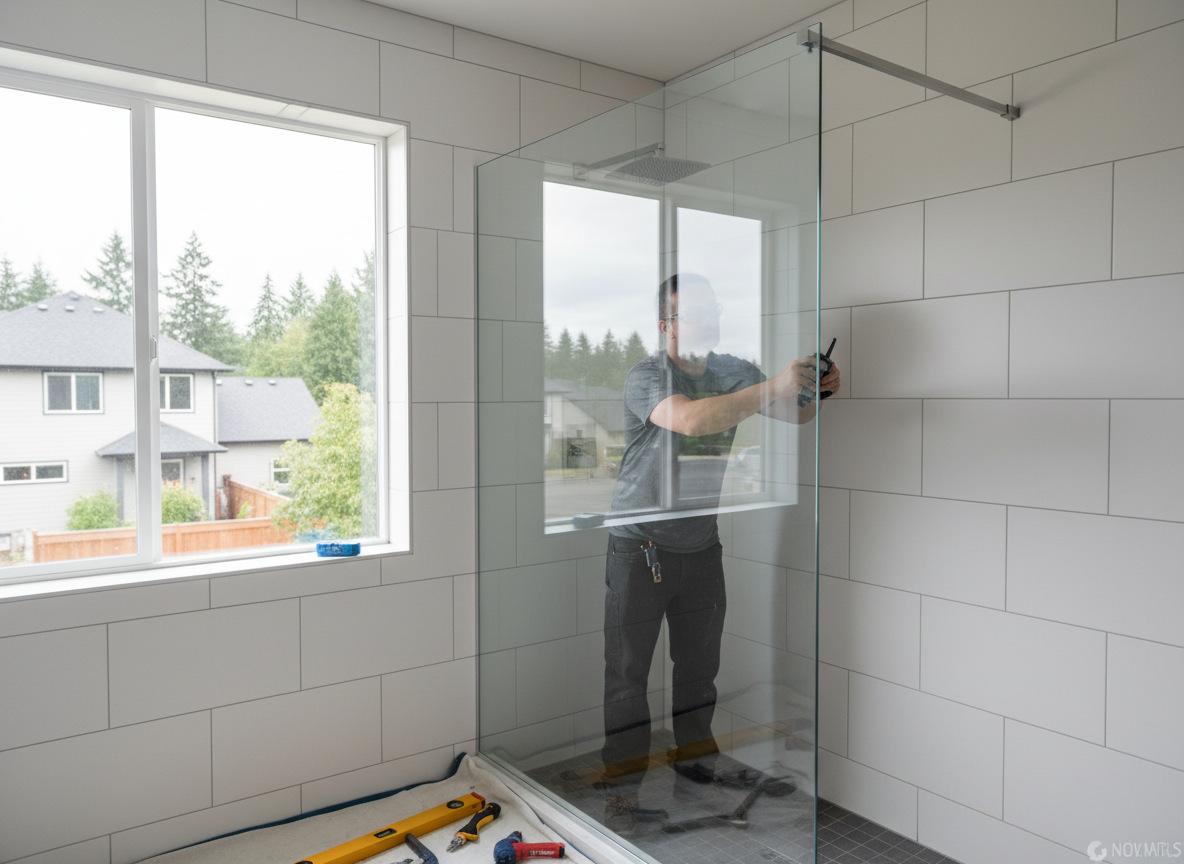
Bellevue homes built before the 1990s in neighborhoods such as Lake Hills and Eastgate often have original plumbing routed through crawl spaces that sit close to the water table near Lake Washington. Shower installation here starts with verifying the subfloor slope and replacing any compromised joists before the pan liner goes in. Wet winters bring prolonged humidity that can push moisture behind tile if the curb and niche details lack proper slope and membrane overlap. We run a full flood test for 24 hours on every pan because a slow leak in a second-story bath can travel into the living space below before it shows on the ceiling.
Materials matter when temperatures swing between 35 and 55 degrees through the winter months. We use pre-sloped foam panels with integrated waterproofing rather than traditional mortar beds in many Crossroads and Factoria remodels because they cure faster in cool, damp conditions and reduce the risk of efflorescence on natural stone. Drain selection is critical near Meydenbauer Center and Bellevue Square where newer high-rises sit next to older single-family stock; we match the drain body to the existing waste line size to avoid future camera-scope work through finished walls.
King County permitting requires a minimum 1/4-inch per foot slope to the drain and a 48-hour cure on topical waterproofing before tile can begin. In homes bordering Redmond and Kirkland, we also check for shared wall setbacks that affect how far the shower can extend without triggering additional inspections. These steps keep the project moving even when rain delays material deliveries from Seattle suppliers.
Handling Moisture in Wet Winters
Constant rain and high indoor humidity during Bellevue winters mean every seam, curb, and niche must be treated as a potential water path. We install a full liquid-applied membrane up the walls six inches past the highest tile course and overlap it with the pan liner by at least two inches. This extra step prevents the mold growth that commonly appears in older Eastgate and Somerset baths after five or six wet seasons.
Technician insight
In Bellevue, the thing that catches most people out with Shower Installation is how our mild oceanic climate with wet winters accelerates hidden rot in homes built before 1990 in Eastgate and Somerset. Homeowners often skip the extra membrane overlap on the curb because they assume the rain stays outside, but constant indoor humidity pushes moisture right through standard tile grout within a couple seasons.
Shower Replacement in Crossroads
Homeowner reported slow leak staining the ceiling below after heavy winter rain. We opened the floor and found the original liner had separated at the drain flange due to years of moisture cycling. Replaced the pan with a pre-sloped foam system, extended the membrane six inches up the walls, and installed new tile. The ceiling repair held through the next rainy season with no recurrence.
How it works
- 1
Site Assessment
Measure the existing footprint, inspect subfloor and waste line access, and note any moisture stains from prior leaks common in Bellevue's older stock.
- 2
Waterproofing and Pan Build
Install pre-sloped panels or traditional liner, apply membrane to walls, and flood-test the assembly before any finish work begins.
- 3
Rough-In and Curb Detail
Set the drain, build the curb with proper slope, and run plumbing lines while protecting finished surfaces from winter moisture.
- 4
Tile and Final Seal
Lay tile with continuous grout joints, apply penetrating sealer suited to local humidity, and re-test for leaks before cleanup.
- 5
Final Inspection and Handover
Walk the homeowner through maintenance, provide care instructions for the specific materials used, and schedule any follow-up visits.
Pricing
Pricing varies by square footage, material choices, and whether structural subfloor work is required in older Bellevue homes.