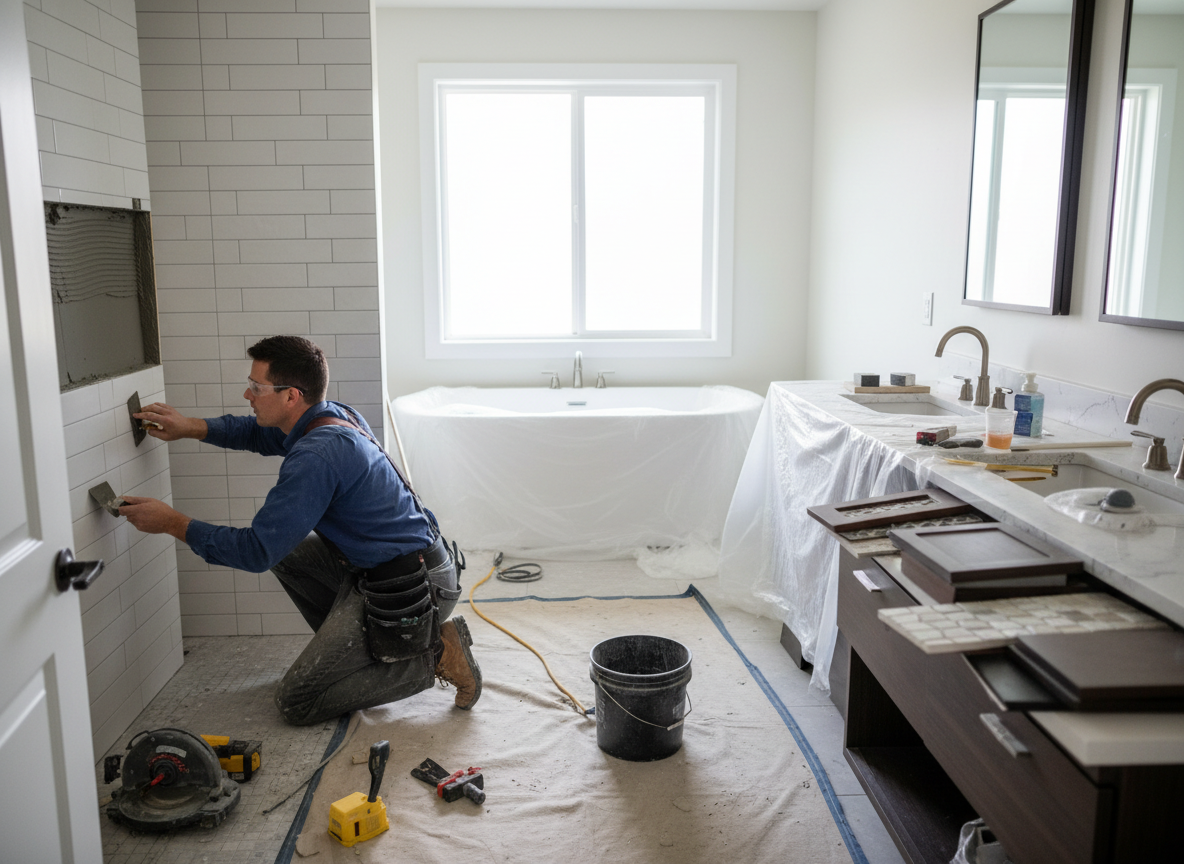
Bellevue homes built from the 1960s onward in areas like Lake Hills and Factoria often feature original plumbing that needs careful integration during upgrades. Wet winters bring prolonged humidity that can accelerate mildew behind tile or under new vanities if ventilation is not addressed. We select moisture-resistant substrates and sealants proven to hold up along the Lake Washington corridor where temperature swings and constant dampness test every joint. Older stock in Crossroads frequently has smaller footprints that require precise layout changes to avoid code conflicts with King County setbacks on waste lines.
Finishes must account for the mild oceanic conditions that keep indoor moisture levels elevated for months. In Eastgate and Somerset properties, we routinely replace standard drywall with cement board on all wet walls and install exhaust systems tied to humidity sensors rather than timers alone. This prevents the peeling paint and warped trim that appear after a few seasons when standard materials meet Bellevue's rainfall patterns. Downtown Bellevue condos add another layer with shared walls and strict HOA rules on noise and water shutoffs that dictate phased scheduling.
Upgrades in Kirkland-adjacent pockets and Redmond border homes often involve matching existing tile styles from the 1980s while bringing fixtures up to current flow standards. We verify slab conditions before setting new tubs or showers because settling common on the east side of Lake Washington can create lippage if the subfloor is not leveled first. These details determine whether a refresh lasts or requires rework within five years.
Technician insight
In Bellevue, the thing that catches most people out with Bathroom Upgrades And Finishes is underestimating how wet winters drive constant indoor humidity in 1970s and 1980s homes around Crossroads and Eastgate. Standard drywall and basic fans fail quickly when moisture lingers for weeks, leading to hidden mold behind new finishes if the substrate and ventilation are not upgraded together.
Factoria Shower Refresh
A Factoria homeowner called after repeated grout cracking in a 1980s shower. We found saturated drywall from years of steam buildup during King County's wet season. The fix involved cement board replacement, a humidity-controlled fan tied to the existing duct, and new tile set on a properly sloped pan. The shower now stays dry between uses without recurring issues.
How it works
- 1
Site Assessment
We measure the existing layout, check ventilation paths, and note any plumbing or electrical constraints typical in Bellevue homes built before 1990.
- 2
Material Selection
Clients review moisture-rated options suited to King County's wet winters, including substrates and sealants that perform in areas like Factoria and Lake Hills.
- 3
Demolition And Prep
Old finishes are removed while protecting surrounding floors and walls, followed by inspection of framing and subfloor for water damage common after decades of humid conditions.
- 4
Installation
New tile, vanities, and fixtures are set with attention to expansion joints and ventilation integration to handle Bellevue's prolonged damp seasons.
- 5
Final Walkthrough
We test all seals, confirm exhaust function, and review maintenance steps specific to local humidity before turnover.
Pricing
Upfront quotes reflect scope, material choices, and any hidden water damage found during demolition; contact SerenePeak Builders at our 14205 SE 36th St address for details.