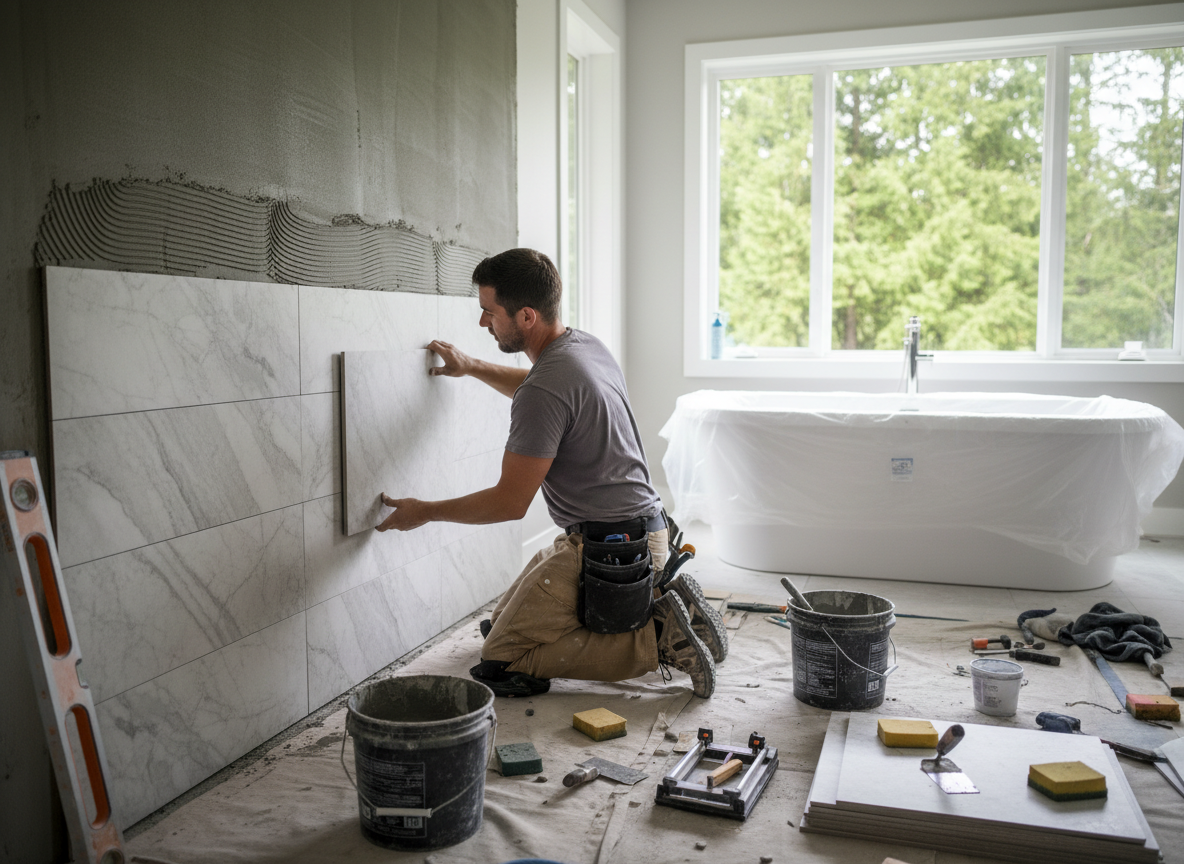
Bathroom tile installation in Bellevue demands attention to the mild oceanic climate and frequent wet winters that drive moisture into older homes in neighborhoods like Lake Hills and Eastgate. Substrates in these 1970s and 1980s builds often show hidden water damage from poor original ventilation, requiring full removal and new moisture barriers before any tile goes down. Near Lake Washington or in Somerset, hillside drainage can push additional humidity through slabs, so we always test for vapor transmission and use uncoupling membranes on concrete to prevent cracking. Working with materials like porcelain or natural stone means selecting low-porosity options that resist mildew common in Redmond and Kirkland spillover humidity.
Edge cases appear regularly in Factoria and Crossroads condos where small bathrooms force tight layouts around existing plumbing chases. Code in King County requires proper slope to drains and waterproofing behind all wet areas, so we integrate Schluter systems or equivalent to meet inspection standards without shortcuts. Homeowners often overlook how seasonal temperature swings affect adhesive cure times, leading to hollow tiles if work occurs during peak winter rains. We schedule pours and setting only after confirming indoor humidity levels stay below thresholds that would compromise bonds.
In Downtown Bellevue high-rises or Meydenbauer Center-adjacent properties, access limits and noise rules change how we stage materials and protect finished surfaces. Tile patterns must account for movement joints in buildings that experience slight settling from the regional terrain. We source from local suppliers familiar with Bellevue Square area projects to match existing finishes in remodels that blend with nearby Seattle influences.
Proper prep prevents the callbacks that plague rushed jobs on older Eastgate stock. Every installation includes pre-float checks and post-install moisture readings to confirm the system holds up through another Bellevue winter.
Technician insight
In Bellevue, the thing that catches most people out with Bathroom Tile Installation is skipping substrate prep in wet winters, especially on 1980s slabs in Crossroads or Factoria where hidden moisture from Lake Washington humidity later lifts tiles. Homeowners assume the floor is solid because it looks flat, but regional rains push vapor through without a proper membrane.
Eastgate Bathroom Floor Refresh
Homeowner in Eastgate reported loose tiles and musty smell after several wet winters. We found saturated plywood underlayment from poor original sealing near the tub. Removed all material, installed new moisture barrier and uncoupling membrane, then set large-format porcelain. Outcome was a stable, mildew-resistant floor that handled the next winter without issues.
How it works
- 1
Site Assessment
Measure the space, test substrate moisture, and note plumbing locations in the specific Bellevue neighborhood home.
- 2
Substrate Preparation
Remove old tile or flooring, repair damage from wet winters, and install waterproofing membranes suited to King County conditions.
- 3
Layout And Material Selection
Plan tile pattern for the room size while choosing materials that handle local humidity near Lake Washington.
- 4
Installation
Set tiles with proper thinset, maintain consistent joints, and ensure slopes to drains meet code.
- 5
Finishing And Cure
Apply grout, seal as needed, and allow full cure time before use, accounting for seasonal weather delays.
Pricing
Pricing varies by tile type, bathroom size, and substrate condition in older Bellevue homes; upfront quotes provided after assessment.